Landscape Rock vs Mulch: Pros, Cons, and When to Switch
Landscape rock lasts indefinitely and needs no annual replacement. Mulch feeds soil and insulates plants but breaks down yearly. Here is how to choose.
Quick Answer
Landscape rock wins on long-term cost and low maintenance — it never needs replacing. Mulch wins on plant health, soil biology, and temperature moderation — it feeds your soil as it breaks down. The best choice depends on what's growing in the bed, your climate, and how much time you want to spend on maintenance.
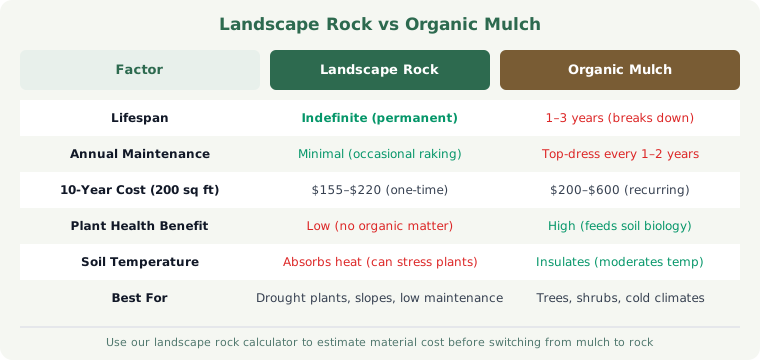
The Main Tradeoffs
Mulch and landscape rock solve the same basic problems — weed suppression and a finished look — but they do it differently, with very different long-term implications.
Landscape rock:
- Lasts indefinitely (rock doesn't decompose)
- Requires no annual top-dressing or replacement
- Reflects heat (can stress plants in hot climates)
- Doesn't improve soil biology
- Higher upfront cost; zero ongoing cost
Organic mulch (wood chips, bark, shredded hardwood):
- Breaks down over 1–3 years, adding organic matter to soil
- Moderates soil temperature (insulates both cold and heat)
- Needs annual or biennial top-dressing to maintain depth
- Lower upfront cost per cubic yard; recurring annual cost
- Supports soil microbe populations that plants depend on
Neither is universally better. They're suited to different plant types and garden styles.
Long-Term Cost Comparison
This is where rock often wins, despite the higher upfront price.
A typical 200 sq ft bed needs approximately 2 cubic yards of mulch at 3-inch depth, costing $60–$120 per application (for bagged) or $40–$80 delivered. Every 1–2 years, you're spending that again. Over 10 years: $200–$600 in recurring mulch costs.
The same area in pea gravel costs $79–$120 in bulk material plus $75–$100 delivery. Total upfront: $154–$220. Then zero for the next 10 years (beyond occasional raking).
Rock breaks even with mulch in 3–5 years and costs less every year after that. This is why commercial properties — parking lot islands, highway medians, retail landscaping — almost universally use rock rather than mulch.
Estimate your exact rock cost using our landscape rock calculator before making the switch.
Plant Health: Where Mulch Wins
For most planting beds with actively growing trees, shrubs, and perennials, organic mulch is better for the plants.
As wood-based mulch decomposes, it:
- Returns organic matter and nutrients to the soil
- Supports fungi and microorganisms that plants need for nutrient uptake
- Moderates soil temperature — keeping roots warmer in winter and cooler in summer
- Retains soil moisture more effectively than rock
Rock, by contrast, can create a "heat island" effect — particularly dark-colored rock in full sun. In hot climates (Southwest, Southeast), rock absorbs heat during the day and radiates it at night, raising soil temperature around plant roots. This stresses heat-sensitive plants and can cause moisture issues.
This doesn't mean you can't use rock around plants — you just need to choose the right rock type (lighter colors, lower thermal mass) and maintain appropriate moisture levels.
When Rock Makes More Sense
Dry/xeriscape gardens: Succulents, cacti, native grasses, and drought-tolerant shrubs are adapted to rocky, low-fertility soils. Rock mulch is appropriate here — and more visually authentic than wood chips around desert plants.
High-maintenance-avoidance areas: Foundation plantings, side yards, and areas you don't want to touch for years benefit from rock. Set it and forget it.
Sloped areas: Rock stays put on grades where mulch blows or washes away in rain.
Play areas and pet zones: Rock (especially pea gravel) drains better, doesn't attract pests, and doesn't create mud the way decomposed mulch can.
Around hardscape: Patios, pathways, and walls look more cohesive when bordered by rock than by wood mulch that scatters onto the hardscape.
When Mulch Makes More Sense
Vegetable gardens and annual beds: The soil biology benefits of decomposing mulch actively support productivity. Use wood chips, straw, or shredded leaves.
Young trees: A 3-inch mulch ring (not touching the trunk) is standard practice for newly planted trees. Rock can cause trunk damage and excessive heat accumulation at the root flare.
Cold climates: Mulch insulates roots against hard freezes. Rock doesn't.
Budget-constrained projects: For a 1,000 sq ft area, mulch runs $100–$200 to install vs. $400–$600 for rock. If the budget is tight and you'll redo it in 2 years, mulch makes more financial sense short-term.
Making the Switch from Mulch to Rock
If you're replacing an existing mulch bed with rock, there's a right way to do it:
- Remove old mulch completely. Don't just layer rock on top. Old mulch under rock creates a wet, anaerobic layer that breeds mold and rodents.
- Install fresh landscape fabric. Old fabric from a previous installation may be torn or compromised. Start fresh.
- Install edging if not already present — rock migration is more visible and harder to manage than mulch blowout.
- Calculate your rock need based on the area dimensions — our estimator tool handles this in under a minute.
- Order and install at the correct depth (2–3 inches for decorative beds).
Follow our landscape rock installation guide for step-by-step details on the process.
The Hybrid Approach
Some gardeners use both: rock in low-traffic visible areas and around drought-tolerant plants, mulch in productive planting beds and around trees. This is pragmatic — use the best material for each zone rather than committing uniformly to one approach across the entire property.