Pea Gravel vs River Rock: Which Is Right for Your Yard?
Compare pea gravel and river rock on cost, drainage, appearance, and best uses. Find out which landscape rock is right for your project.
Quick Answer
Pea gravel wins on cost and versatility — it's ideal for pathways, pet areas, and tight-budget projects. River rock looks more natural and handles high-traffic decorative areas better, but costs 30–70% more per ton. The right choice depends on how the area will be used.
What's the Actual Difference?
Pea gravel and river rock are both naturally rounded, smooth stones — but that's where the similarity ends.
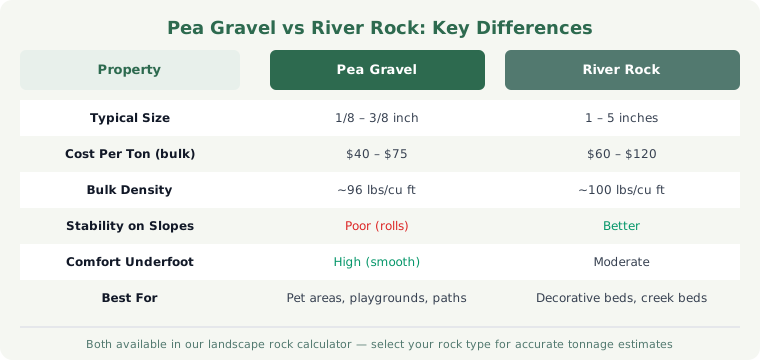
Pea gravel consists of small, water-worn stones typically ranging from 1/8 to 3/8 inch in diameter. The name comes from the stones' resemblance to dried peas. They're small enough to compact into a relatively stable surface, and their smooth edges make them comfortable to walk on barefoot. Pea gravel is almost always purchased in bulk and is the most affordable common landscape rock.
River rock refers to larger rounded stones — typically 1 to 5 inches in diameter — that have been smoothed by water erosion over time. The "river" designation just means naturally tumbled (not angular or crushed), though much of what's sold today is quarried and mechanically smoothed. River rock comes in many colors and finishes, which is why it's the top choice for visible decorative applications.
Size and Weight Comparison
Size affects both appearance and how much rock you'll actually need. Because river rock is larger, a given volume of it looks "fuller" visually — but the calculation still comes down to cubic feet and bulk density.
| Rock Type | Typical Size | Bulk Density | Tons per Cubic Yard |
|---|---|---|---|
| Pea gravel | 1/8–3/8 inch | ~96 lbs/cu ft | ~1.30 tons |
| River rock (sm) | 1–2 inch | ~98 lbs/cu ft | ~1.32 tons |
| River rock (lg) | 2–5 inch | ~100 lbs/cu ft | ~1.35 tons |
The weight difference between these two is minimal — pea gravel is actually slightly lighter per cubic yard than river rock. If you're using our landscape rock calculator to estimate your order, make sure you're selecting the correct rock type to get accurate tonnage.
Cost Comparison (2025)
Pea gravel is consistently cheaper than river rock across the country. Here's what you can expect to pay from a landscape supply yard:
- Pea gravel: $40–$75 per ton (bulk)
- Small river rock (1–2 inch): $55–$90 per ton
- Large river rock (3–5 inch): $65–$120 per ton
For a 200 sq ft area at 3 inches deep, you'd need roughly 1.44 tons of pea gravel or 1.50 tons of river rock. At median prices, that works out to about $72 for pea gravel vs $112 for mid-sized river rock. Not a huge difference for a small project — but on a 2,000 sq ft commercial property, the gap becomes $720 vs $1,120 before delivery.
Both materials are far cheaper than bagged equivalents from home improvement stores, which can run $200–$350 per ton equivalent. For our full pricing breakdown, see our 2025 landscape rock cost guide.
Drainage Performance
This is where the two rocks diverge significantly.
Pea gravel compacts more tightly due to its smaller, uniform size. This actually reduces its drainage rate compared to larger rocks — water still drains through it, but slower. In areas with heavy rainfall or poor-draining clay soil, compacted pea gravel can puddle.
River rock leaves larger void spaces between stones. Water moves through it more freely, making it a better choice for areas where drainage is a concern — around foundation plantings, along fence lines, or in low spots. For actual drainage applications like French drains, though, angular crushed rock beats both options. See our guide to the best rocks for drainage.
Best Uses for Each
Choose pea gravel for:
- Dog runs and pet areas (comfortable underfoot, easy to hose down)
- Children's play areas (soft landing surface, meets ASTM fall attenuation standards at 6+ inch depth)
- Budget-conscious pathways and walkways
- Filling narrow spaces and joints between stepping stones
- Any project where fine, tight coverage matters more than visual drama
Choose river rock for:
- Decorative garden beds around shrubs and trees
- Dry creek beds and water features
- Visible side-yard pathways where appearance matters
- Around foundation plantings (larger size resists displacement by rain)
- Sloped areas where smaller gravel would roll downhill
Stability and Shifting
Pea gravel doesn't hold still. It migrates — especially on slopes and under foot traffic. It's one of the most common complaints about pea gravel installations. Containment is essential: use solid edging (metal, rubber, or concrete) around all pea gravel areas to prevent spread onto lawn or hard surfaces.
River rock, because of its weight and size, stays put better. A 3-inch river rock isn't going anywhere unless water is physically moving it. It's not perfect — large smooth river rock is notoriously slippery when wet, which is why it's not ideal for high-traffic walking surfaces without added texture.
Installing Either Rock Correctly
Both materials benefit from landscape fabric underneath. It keeps the rock from sinking into soil over time and suppresses weeds far more effectively than rock alone. Use commercial-grade woven fabric (2-3 oz/sq yd minimum), not the flimsy black plastic sheeting sold at discount stores.
Depth recommendations:
- Pea gravel: 2 inches minimum, 3 inches for full coverage
- Small river rock: 2–3 inches for decorative beds
- Large river rock: 3–4 inches to fully cover soil
Not sure how much material you'll need for your project? Run your dimensions through our rock quantity estimator — it handles both pea gravel and all river rock sizes separately.
The Bottom Line
If budget is your main concern and you're covering functional areas like pet runs, playgrounds, or basic pathways — pea gravel is the clear choice. It's cheaper, easier to shovel, and versatile.
If you're investing in a visible area where the look matters and budget has a bit of flexibility — river rock delivers better aesthetics and holds its position better over time.
Neither is universally "better." They're different tools for different jobs. The decision comes down to: where is it going, who will see it, and what's the budget?