How Deep Should Landscape Rock Be? Depth Guide by Project
The right landscape rock depth depends on your project. Garden beds need 2–3 inches, pathways 3–4 inches, and drainage up to 12 inches. Here is the full guide.
Quick Answer
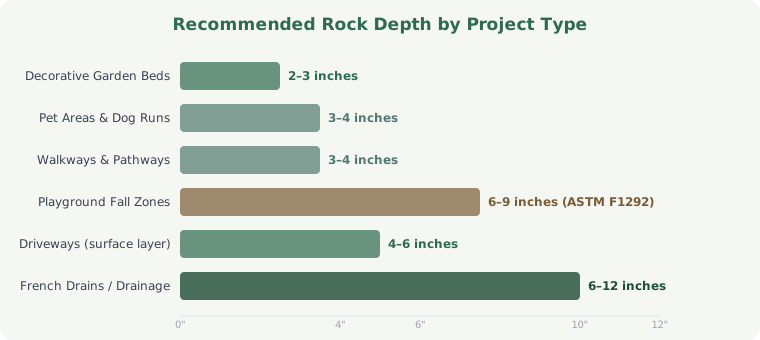
The standard landscape rock depth for most decorative garden beds is 2–3 inches. Walkways and pathways need 3–4 inches. Driveways require 4–6 inches. Drainage applications need 6–12 inches. Going too shallow wastes money on a second installation; going too deep wastes material.
Why Depth Matters So Much
Depth is the variable that affects material cost more than any other — more than area size in many cases. Doubling your depth doubles your material order. Yet most DIY guides treat depth as an afterthought, with vague advice like "a few inches" or "until covered."
Getting this right before you order saves money and prevents the two most common complaints about landscape rock: looking thin and sparse after a season, or spending twice as much as needed on a project.
Here's the depth math in real terms. For a 20×15 ft area:
- At 2 inches deep: 50 cubic feet = ~2.4 tons of pea gravel
- At 3 inches deep: 75 cubic feet = ~3.6 tons of pea gravel
- At 4 inches deep: 100 cubic feet = ~4.8 tons of pea gravel
Each extra inch costs you roughly $55–$80 more (at $45–$65/ton for pea gravel) on a 300 sq ft area. Know your target depth before you call the supplier.
Use our landscape rock calculator to see exactly how depth changes your tonnage estimate.
Depth Recommendations by Project Type
Decorative Garden Beds: 2–3 Inches
Most ornamental plant beds, foundation plantings, and shrub borders look good and function well at 2–3 inches. At 2 inches, you'll see soil color peeking through with lighter rocks like marble chips or lava rock — not ideal aesthetically. At 3 inches, the coverage is solid.
With landscape fabric underneath: 2 inches can work if the fabric is installed correctly, since the fabric prevents soil from bleeding through. Without fabric, use 3 inches minimum.
Rock size affects required depth: Larger rocks need more depth to fully cover the surface. Small pea gravel (3/8 inch) fills in at 2 inches. River rock (2–3 inch diameter) looks thin unless layered 3–4 deep.
Pathways and Foot-Traffic Areas: 3–4 Inches
People walking on landscape rock sink into it slightly, compressing the layer. A 2-inch pathway compresses to almost nothing within a season of foot traffic.
Three inches is the minimum for a pathway that gets occasional use. Four inches is better for main walkways, side yards, or anywhere that gets daily traffic. This also prevents rocks from migrating as much under repeated footfall.
For pea gravel specifically: Add edging on both sides — contained pea gravel pathways hold their depth far better than unconstrained ones. See our installation guide for edging options.
Driveways: 4–6 Inches
Vehicle traffic compresses gravel aggressively, especially during the first few months. A properly built gravel driveway needs 4–6 inches of surface rock over a compacted base.
For best results, build the driveway base in layers:
- 6-inch compacted base layer (crushed limestone or road base)
- 3-inch middle layer (smaller crushed stone)
- 3-inch top dressing (decorative gravel or 3/4-inch crushed stone)
The total is closer to 12 inches of aggregate, but the top surface layer (which you're calculating as "landscape rock") is 3–4 inches. Use angular crushed rock, not smooth river rock, which shifts under tires.
Mulch Replacement Under Trees and Shrubs: 2–3 Inches
Rock used to replace organic mulch in plant beds works at the same depth as decorative beds: 2–3 inches. However, there's an important consideration: rock doesn't insulate soil temperature the way mulch does, and it doesn't break down to add organic matter.
If you're replacing mulch around plants that need soil temperature moderation (most perennials and shrubs), use lighter-colored rock that reflects rather than absorbs heat, and stick to 2 inches rather than 3 to reduce the thermal mass.
Pet Areas and Dog Runs: 3–4 Inches
Pea gravel at 3–4 inches depth is the most popular surface for dog runs because it drains well, doesn't hold odors the way mulch does, and is comfortable on paws. The extra depth compared to a decorative bed accounts for dog movement compressing and displacing the surface layer.
The University of Minnesota Extension recommends a minimum 4-inch depth for pet areas to ensure adequate drainage and surface stability.
Playground Fall Zones: 6+ Inches (ASTM Standards)
If you're using pea gravel under playground equipment, the ASTM F1292 fall attenuation standard requires minimum depths based on equipment height:
- Equipment up to 4 ft high: 6 inches of pea gravel
- Equipment up to 6 ft high: 9 inches of pea gravel
- Equipment up to 10 ft high: 12 inches of pea gravel
This is a safety standard — don't cut corners here. The depth must be maintained over time, which requires periodic top-dressing as the gravel compacts and migrates.
French Drains and Drainage Beds: 6–12 Inches
Underground drainage applications need significantly more rock than surface applications. A French drain trench is typically 12 inches wide and 12–24 inches deep, most of which gets filled with crushed stone around a perforated pipe.
See our full guide on best rocks for drainage for French drain specifications.
How Depth Affects Your Material Order
Once you know your target depth, you can calculate exact quantities with our landscape rock estimator. Here's a reference table for a 100 sq ft area:
| Depth | Cubic Feet | Cubic Yards | Tons (pea gravel) |
|---|---|---|---|
| 1 inch | 8.3 | 0.31 | 0.40 |
| 2 inches | 16.7 | 0.62 | 0.80 |
| 3 inches | 25.0 | 0.93 | 1.20 |
| 4 inches | 33.3 | 1.23 | 1.60 |
| 6 inches | 50.0 | 1.85 | 2.40 |
| 12 inches | 100.0 | 3.70 | 4.80 |
Multiply these figures by your actual area (in 100 sq ft increments) to estimate your needs. Or use the calculator directly — it handles all the math instantly.
The Cost of Getting Depth Wrong
Too shallow: You'll see bare fabric or soil within a season. Weeds germinate in the thin layer. The installation looks cheap. Fixing it requires adding a top-dressing layer — an extra delivery fee plus material cost.
Too deep: You've paid for material you didn't need. At $55/ton for pea gravel, an extra inch of depth on a 500 sq ft area costs roughly $27 in material — not catastrophic, but multiplied across a large property it adds up.
The right depth the first time is both the cheapest and best-looking outcome. For most projects, 3 inches is the safe default.